
Brakepads
And a Stubborn driver

Carbon fiber is an interesting material, currently vital in many engineering feats at the bleeding edge.
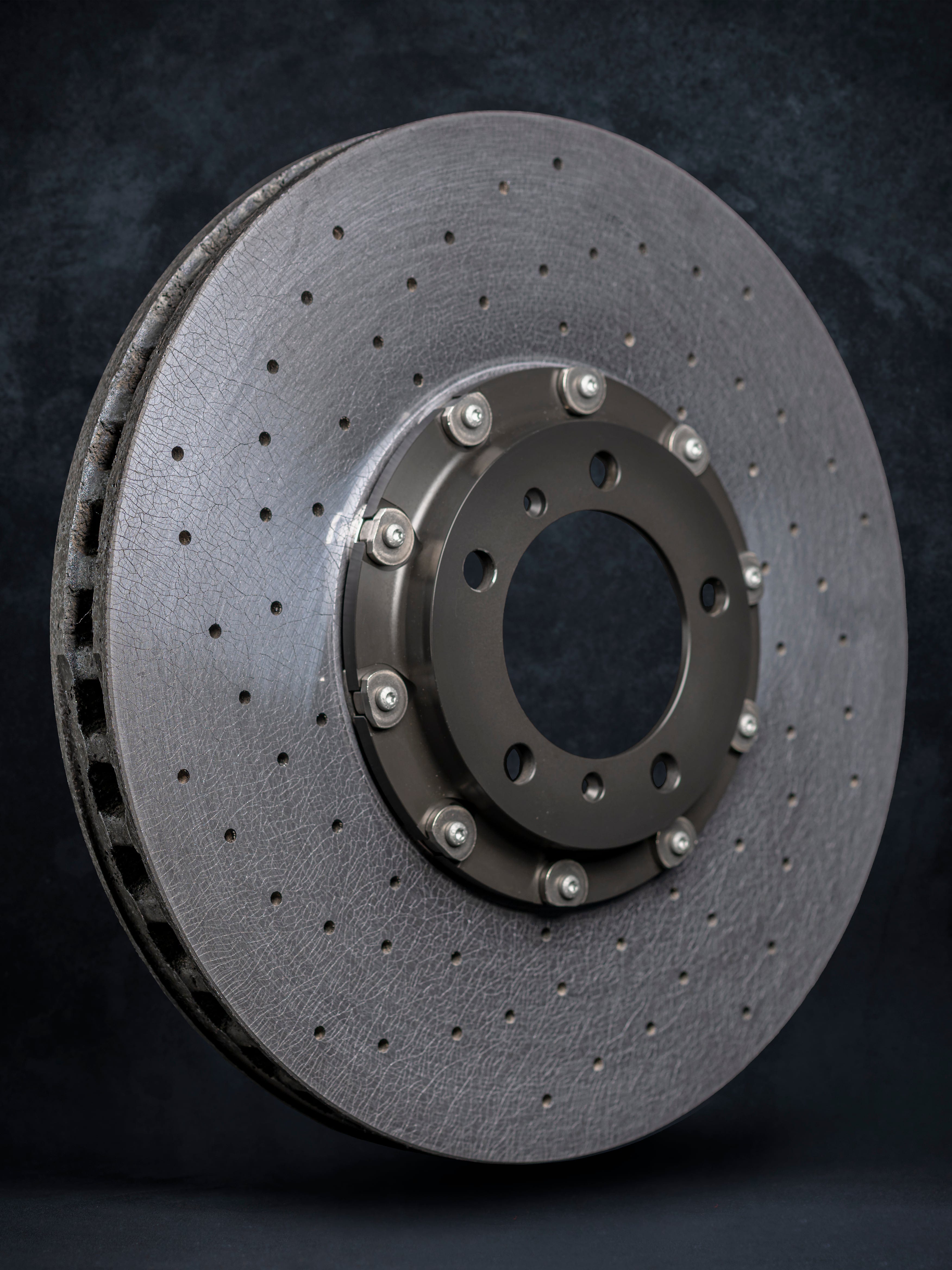
Dereva
I love letting people know what they did to trigger why I am writing any piece. This might be one aspect, or many indirect contributions. Makes the story interesting if you ask me, so a reader is getting the highest honour for this one. A not-so-anonymous reader suggested I talk about data centers. The connection between a brake pad, a driver (an economy), and data centers should begin forming in your head.
‘KDF’
I recently learnt about a straightforward way of explaining how the retail business operates that really pays homage to Feynam in its simplicity. You operate a shop inside a school campus, in one of the campus halls of residence. For like a month in April, things are slow, and most students are out on holiday. You still receive your ‘KDF’ shipment every so often. You tell the boda guy who swings by to bring them to skip a day or two, the demand is low. The boda guys somehow discuss this up the chain, and the retail company's production catches up. Schools open in a few months, and the boda guy can keep coming daily now. I would not know the degree of guesstimates that live in these small economies, but they really work. Because they do account for small bursts from evolving student activities.
I will use the bullwhip effect to elaborate further, and this is a term I came across recently. Where a small fluctuation in consumer demand for those KDFs bubbles up the supply chain, causing progressively larger fluctuations for suppliers, distributors, manufacturers till we reach the soil. The point where brakes are really tight.
Maybe I should have named this article clouds or something
Had to throw it in there that there is an International Cloud Atlas, which has existed since 1896. There is a mini classification of clouds similar to the animal kingdom, with basic genera (the Cumulus, Stratus) that the Kenya curriculum exposed me to, and their derivatives referred to as species. Species are based on shape, transparency, and other characteristics, and there could be more than 100 combos. Before 2017, there had not been a new cloud classification in 50 years. A gentleman a peculiar one in 2009, and it became an official cloud. Asperitas.

It will rain
The cloud is a term that, as we grew up, we came to understand more descriptions of when the internet roped us in. That is where our data lives. All our digital activity. Much of that revolves around data centers, where physical computer components run around the clock. You know this. Have you seen one close to you, though? For Africa as a continent, as part of our digitization, we initially hosted telco-focused data centers first, before other carrier-neutral (this is so cool, coming back to it later) facilities were set up. As rare as the cloud was for us before, as a continent, it’s still forming. Like the asperitas.
Why are we here
Well, a lucrative economy developed around compute. And this loosely refers to storage, memory, networking, plus other resources that, as they are being consumed, a Netflix series (currently watching The Good Place after finally getting a reason to, thanks to Keith) starts immediately, ChatGPT to disappoint you (wink), and every other thing we take for granted. I took this definition from AWS, who are the biggest beneficiary of this economy. Hell, the best business inside Amazon is actually this cloud computing segment. The money printer. As they did with the definition of compute, AWS also makes it quite tough for you to understand any setup to even make a website live for others to access, especially as a beginner. Developers reading this know this. Hadi, I see the UI and get PTSD. I finally know how to use it well, and it’s quite rad. Well, that business is at the centre of the most common buzzword you currently know of.
We, Africans, are watching from the sidelines, unable to rapidly commit to even making a dent in that economy outside our internal consumption as a continent. Well, of late, the scramble to set up data centers in resource-scarce areas like deserts requires adopting cooling mechanisms that save water, and some of these have been done in Africa first. I will dive into a brief history of data center evolution, and you will see how much of our voice is nonexistent. As with most other things, several reasons and Africatalyst talk about it broadly here, and a specific example with Egypt here.
The one I promised
1946 is often traced as a good starting point with the ENIAC, a large machine room, dwarfed by today’s electronic devices in terms of computing ability, but it set the design standards for a data center room. The high security we see in data centers today was born during that era, mostly to protect the physical hardware and the information stored at the time, most of which was sensitive. A key physical component was vacuum tubes, the primary electrical component, allowing electrons to flow through, and you could thus control the flow of, and program it for functionality. They would get really hot, and if not frequently cooled, the whole setup could melt.
The 1950s gave birth to the transistor, which replaced the vacuum tubes for performing calculations necessary for the manipulation and storage of information. The first size-significant reduction was kick-started during this time period. And since transistors were more reliable than vacuum tubes, those initial computers could now be up for longer periods.
The 1960s and 70s saw raised ceilings, the introduction of more innovative cooling strategies, and the Uninterruptible Power Supply (UPS). In the 80s, the personal computer (PC) era was born, and with it, more demands for connectivity. In the 90s, the internet was born, and people needed to exchange information quickly. Data centers had to facilitate this, and there rose carrier-neutral facilities supporting multiple types of clients. They set up the Meet-Me Room (MMR) where everyone is plugged in and can share information directly through cross connect. A lot of fiber optic cable technology evolved and was set up during this period.
The 2000s saw the internet economy crash, and many companies responsible for the data center evolution crashed out with it. Upstarts like Google, Facebook, and Amazon progressively took up the already set infrastructure that was now available for cheap, and went with it. This has involved coming up with innovative software to take advantage of hardware for specialized purposes. They also had to wrestle with the energy inefficiency. Either way, their entry meant that the new hyperscale era emerged, which we have today, to power the internet as it grew.
Currently, you are aware of the high energy and water demands of these hyperscale data centers and the sustainability conversations. AI sucks a lot of energy due to the nature of the hardware needed to train and serve the models at scale.
Back to the KDF
I have talked about that hardware in a separate article. But, for the GPUs, the bullwhip effect is in full swing. The primary consumers are the people scrambling to lead this race. OpenAI shocked us by releasing a commercial model at scale. The designers of the GPUs, Nvidia, suddenly became the most important name for those concerned. They could see the demand rising, and they gave it their best shot, designing more advanced hardware. Side note, Africatalyst talked about an example scenario where Africa could plug itself into this economy. You can read it here. I skipped a lot of detail when talking about transistors, but he’s got you covered.
NVIDIA design, TSMC build. TSMC’s reaction to changes in demand cannot be as swift because of the scale of the economy they run, because of that bullwhip effect. Check the video below to understand the scale.
Their reaction took a few years to catch up, and in 2026, we are already in a shortage.
Unlike the KDF, an increase in demand for compute cannot be immediately met. The one we call a bottleneck also essentially serves as the brakes for the recklessness of the driver, who is the rest of us, trying to squeeze something out of AI at the expense of almost everything else.
https://stratechery.com/2026/tsmc-risk/
https://www.investopedia.com/bullwhip-effect-definition-5499228
https://blog.enconnex.com/data-center-history-and-evolution
https://www.datacenterknowledge.com/data-center-construction/8-milestones-in-data-center-history-1946-to-today
https://powerandcoolingme.com/the-evolution-of-data-center-cooling-technologies-innovations-for-sustainability/
https://en.wikipedia.org/wiki/Meet-me_room
https://docs.google.com/document/d/1W02gR9wThR4AigrFaJxQ375KwKjDamdfAyGvcKHYYCo/edit?usp=sharing
Very interesting write-up. Thanks for the shout-out! I am currently doing a deeper dive into data centres, and this kdf-esque "just in time manufacturing". I will heavily borrow from you!